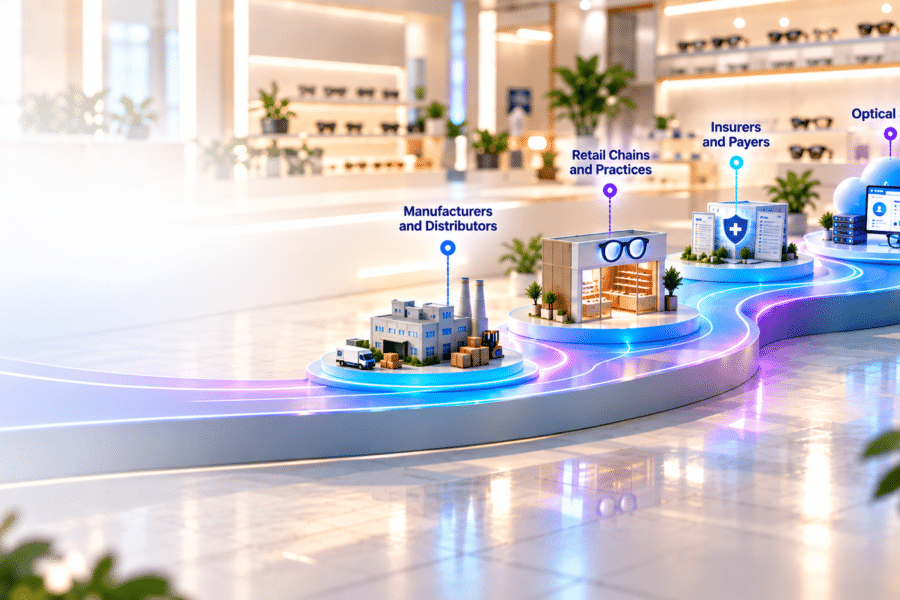
Helping Optical Industry Visualise an AI-Enabled Ecosystem

Helping Optical Industry Visualise an AI-Enabled Ecosystem Nov 18th |…
Felix PhaseOctober 5, 2026







More children today are being diagnosed with myopia, also known as short-sightedness. It is a common eye condition in which children can see things close to them clearly but struggle to see things farther away.
For many families, getting glasses feels like the solution. But myopia often continues to progress as a child grows. This is why myopia kids treatment is about more than simply improving vision. It is also about understanding how a child’s eyesight is changing over time.
Myopia can develop slowly, which makes changes difficult to notice from day to day. Children often adapt to their vision without realizing it has changed. As a result, progression can continue unnoticed between eye exams.
Most children have regular eye exams, but a lot can happen between appointments.
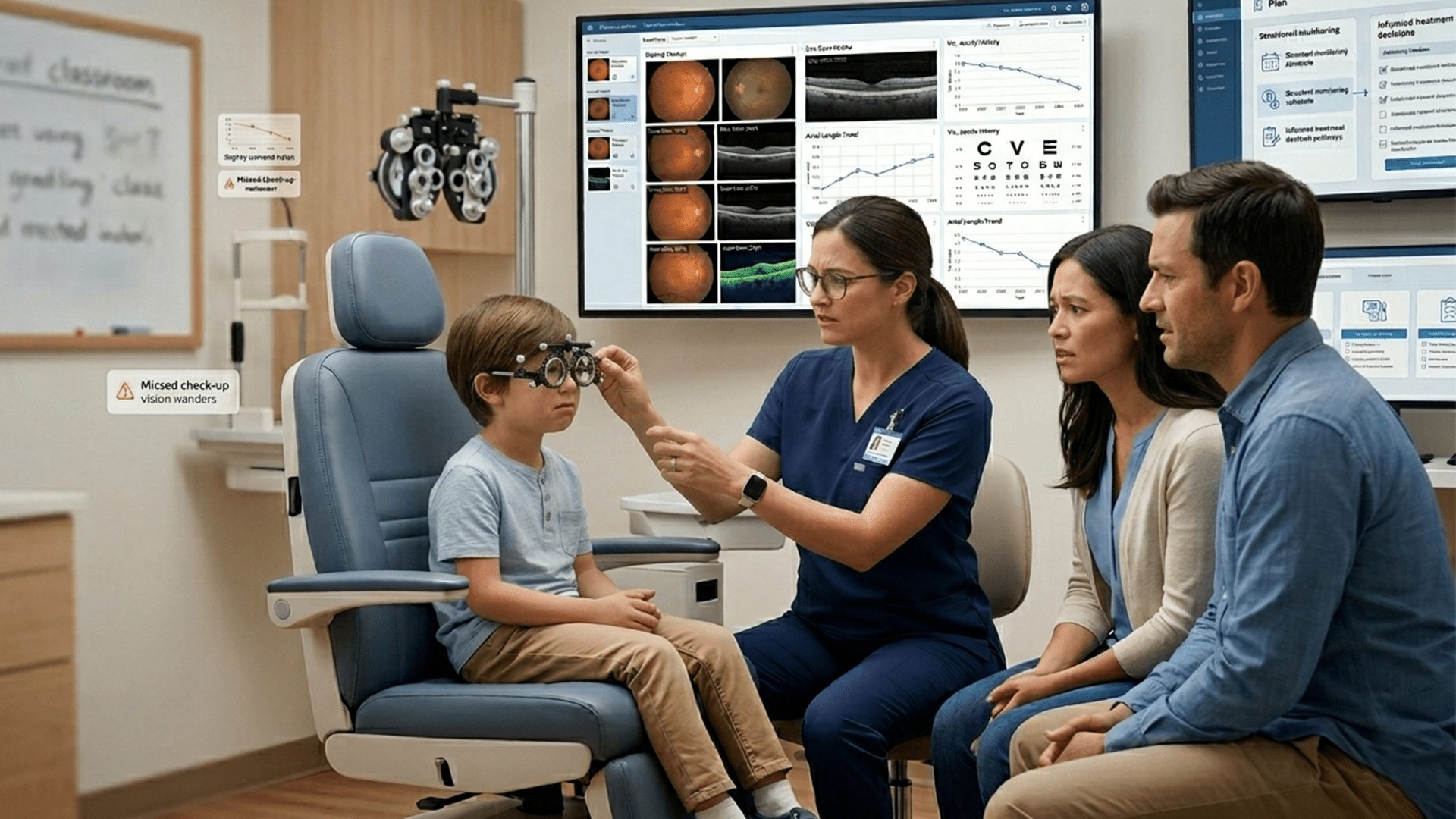
In many cases, Undetected myopia progression in children occurs because there are no obvious warning signs. A child may move closer to the television, hold books closer to their face, or find it harder to see the classroom board. These changes can happen gradually and are often easy to overlook.
Parents may assume their child’s glasses are still working well, while vision continues to change in the background.
By the time the next appointment arrives, important opportunities to better understand progression may already have been missed.
Not every child experiences myopia in the same way. Some children may see only small changes in their vision, while others may experience faster changes over a shorter period of time.
Understanding Childhood myopia progression helps eye care professionals build a clearer picture of how a child’s vision is changing. Looking at progression over months and years can reveal patterns that may not be obvious during a single eye exam.
Tracking these changes provides valuable information that can help guide future care decisions and support a more proactive approach to managing myopia.
Making the right decision starts with having the right information.
This is why monitoring plays such an important role in Myopia treatment decisions for kids. When eye care professionals can see how quickly a child’s vision is changing, they are better equipped to determine the most appropriate next steps.
Without that information, decisions may rely only on prescription changes rather than a broader understanding of how the condition is progressing.
Consistent monitoring helps practitioners and families work together with greater confidence and clarity.
Today, there is a growing focus on Myopia management in children rather than simply updating glasses whenever vision worsens.
The goal is to identify progression early and take steps that may help address it before significant changes occur. Depending on a child’s needs, eye care professionals may discuss different management options as part of a long-term care plan.
Among these options, soft multifocal lenses myopia kids solutions are often considered as one of several approaches that may be recommended in appropriate cases.
At Technovate.One, we believe better outcomes start with better visibility. The more clearly progression can be understood, the more informed treatment discussions can become.
Myopia is becoming more common, but progression should never be left to guesswork.
The biggest challenge is not always the diagnosis itself. It is failing to recognize how much a child’s vision is changing over time. When progression is not tracked, opportunities to make informed decisions may be missed.
With extensive experience in eye care, Dr. Kristie Nguyen brings valuable industry perspective to the growing conversation around myopia awareness and long-term vision health.
At Technovate.One, we believe that understanding progression is an important step toward making better decisions for children and supporting healthier visual outcomes over time.
The more we understand how vision changes, the better prepared we are to respond at the right time.